Thursday, November 20, 2008

Good PowerPoint Design - a strategic business tool

Have you ever "sold" a business project to your management or a venture to a financier? Did you ever happen to use PowerPoint or a similar presentation tool? Probably yes. Well, how much time did you invest in your slide deck? Were your slides beautiful?

Those are questions I now always ask my audiences in my keynotes and workshops on the topic of business model innovation. And most often people do not take PowerPoint seriously. However, they should. PowerPoint is a powerful weapon if used correctly! If used wrongly (as is the case for 90% of presentations) it is rather suicidal.

I attribute a substantial part of my success in my keynote speeches and workshops to my PowerPoint presentations. In fact, the design of my slide decks eat up a big part of my preparation time.

Here my learning as to "Good PPT-Design", which I recently presented at a business incubator in Switzerland


Thursday, November 13, 2008

Business Model Innovation, Big Companies and Creative Destruction

John Gapper wrote a very interesting opinion piece about Detroit’s car industry in the FT this week ("Detroit tries to fool them again" on FT.com). He clearly outlines why he thinks the bailout of the car industry is questionable and how it is counterproductive for the overall industry. I couldn’t agree more with him, because much of the car industry is an example of big business that failed to reinvent itself.

John argues that a bailout will…

  • reward failure
  • preserve chronic overcapacity
  • benefit the least efficient companies

It is not surprising that Detroit is calling for help. Most big companies have problems preparing themselves proactively for changing environments. An example I often cite is the music industries with its 4 major record companies. They are still struggling to adapt to the impacts of digital music.

Big companies’ track record is particularly bad when it comes to business model innovation. In my workshops and keynotes I usually ask the audience which business models they find interesting and innovative. The examples that come up are almost always start-ups or very young companies (e.g. Skype, Google, MySpace, Zipcar, Kiva, no thrills airlines). And if you look at who founded the successful start-ups with innovative business models you will find quite a few that were created by people who had to leave the world of big corporations to implement their ideas (e.g. GoreTex by Robert W. Gore or EFG Bank by Jean-Pierre Cuoni and Lonnie Howell).

The question is then of course: is business model innovation possible within big companies? I do think so, since there are some good examples out there. Nespresso, part of the Nestlé group, disrupted the coffee market with its innovative business model. Procter & Gamble is reaching new heights with its new business model based on open innovation. However, it took Nespresso 30 years and a separate legal entity to succeed and P&G needed a big crisis to adopt change.

The most interesting recent example is maybe Nokia, the world’s largest mobile phone manufacturer. They are currently transforming their business model from a manufacturer to a content company, which is selling music subscriptions and more along its phones. This is a substantial change from a business model based on transactions towards one with recurring revenues.

From my experience the telecom industry seems quite an exciting playground for business model innovation. In October I worked with Norway-based Telenor, seventh larges mobile network operator in the world with major operations in Asia and Eastern Europe and over 150 million mobile subscribers. I was surprised to discover that they had a unit called “business models” focusing on exactly that. It is part of a 200-person strong Research & Innovation (R&I) department and their staff is quite advanced in business model thinking. They look at new products & services and the corresponding business models for all of the markets they serve.

In July I worked with UNE in Columbia, a mid-sized telecom operator that is trying to integrate business model innovation more systematically into their operations. They will be using my business model canvas to format new initiatives.

A general conclusion from what I see in my workshops and keynotes is that there are some companies and industries that are already embracing business model innovation or at least want to learn about it, while some are still very reluctant (though rarely uninterested). Over time I think all companies will face the challenge of business model innovation and it is only a question of time when they start dealing with the issue.

As to Detroit's car industry John Gapper sums it up nicely:

Perhaps the immediate cost of a Detroit bankruptcy is too high but the long-term effects would be beneficial.

Detroit must learn how to reinvent itself again. It will not be possible to save workers' jobs over the long term with a bail-out - it must be innovation and creative destruction...

Tuesday, November 11, 2008

Thank You!

I don’t have a book, let alone a bestseller, and I am not faculty at a prestigious business school. Still, my approach to business model innovation is spreading around the world. People are interested in my thinking and I am getting more and more invitations to deliver keynotes and workshops globally.

This is only thanks to YOU, my audience, fellow business model thinkers, friends and people who have hired me. You are the ones spreading the word about my work, applying it and convincing others to join the thinking. Without you I could not undertake this journey to bring business model innovation management to another level. Thank you!

Thank you to those of you who have taken - and continue to take - the risk of hiring a “no-name" business speaker, simply based on the value you find in my work and my visibility on the web. Through your fees I can continue to advance business model innovation thinking.

Thank you to those of you who apply my work and customize it to your own particular needs and promote it in your organizations. You help improve and complete the inroads I tried to make in business model innovation.

Thank you to those of you who have helped me fill-up my workshops through your valuable business networks and your enthusiasm regarding business model innovation. Without you the seats would remain empty.

Thank you to those of you who read and comment on my blog and give me moral support. I need it to continue my journey towards the business model innovation book and ultimately a platform of like-minded peers who want to advance together and share their experience on business model innovation.

This journey is not easy, intellectually, stamina-wise and financially (despite my relatively high speaking/workshop fees). I only continue because of those of you out there who “read me”, support me, challenge me and hire me. For me these are valuable indicators that show that we are onto something big. Together. As a community. I have the feeling we can create something big around this kernel of a business model innovation approach that I try to promote. I can’t do it alone. I need you on this journey. Only if all of you help, can we make this a killer-approach that spreads globally.

Of course I have a self-interest in this success. But ultimately I am pursuing this because I am passionate about what we can bring to the world. If I were not, I would be working in a private bank in Switzerland and probably earning a comfortable and secure paycheck. But most important, I am stimulated by the growing community of users around the business model innovation approach that I launched.

Thank you for allowing me to continue developing the business model innovation approach. I see it a bit like open source software development. Together with Professor Yves Pigneur I launched a kernel and now hundreds of people are contributing to improving the business model innovation approach and thousands of people are using it...

Let us work together to make this something big! I believe together we can!

Monday, November 03, 2008

Google Book Search - first issue of my new business model innovation example series

During my d"aily lecture of the Financial Times I usually put on my "business model glasses" when it comes to the business section. Every week there are some very exciting examples of business model innovation. I decided to not only share these examples in my workshops, but also on my blog - hence the new "business model innovation example series"...

Enjoy the first issue on a deal that Google struck last week:


Sunday, October 26, 2008

Book Chunk Project - prototype

Yves Pigneur's and my book on the topic of "Crafting Innovative Business Models" (working title) is only due in May 2009 (approx.). That is way too long to wait. Many people asked us for early access. Hence, I thought it could be a good idea to distribute the book content in separate chunks before.

The slides below outline the draft of this idea of giving interested people early access to our writing for 24.- $US (or maybe a little more). By subscribing to this so-called "book chunk project" you will get several things (suggest more...):

  • first & exclusive access to raw book content
  • influence authors
  • x installments of book chunks (in a non-linear order - as we write them)
  • 50% discount off the final book (approx.)
  • participate in exclusive book chunk webinars
  • access to templates
  • being part of the business model innovation community
I would be interested in your comments on this and if you would be willing to buy such an early and exclusive access. Do you think the pricing is too low? Any suggestion is welcome. In the meantime have a look at the slides that outline this idea that I would launch very soon if I feel an interest from your side:

Book Chunk Project - prototype
View SlideShare presentation or Upload your own. (tags: book project)


Thursday, October 16, 2008

Business (Strategy) Books Lack Creativity...

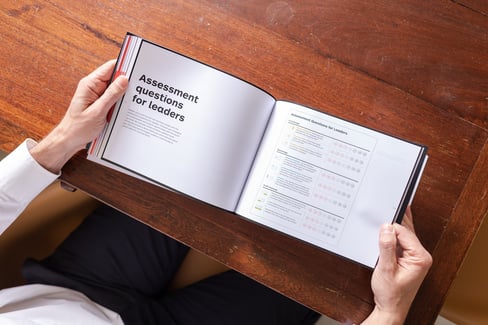
Today I did some research for my upcoming book with Prof Yves Pigneur: I went to a Border's bookstore in New York and browsed the business (strategy) literature for their visuals and design. Basic conclusion: except for the cover there are no to little visuals, even for the most innovative book contents.


The most visual strategy illustration I found was in Kim & Mauborgne's blue ocean strategy book. It is part of their concept to allow for a visual comparison of the differentiation strategy of a company. Though I do like their book, I believe it lacks the same visual creativity than all other strategy books.


As to their form & usability my conclusion is that the large majority of business (strategy) books are totally un-inspirational. So I moved on to architecture books, where I expected some great visual presentations. Of course architecture is more tangible than business (strategy). Yet, I don't accept that excuse...


My nicest surprise during this little research was the discovery of a domain that makes great use of visuals: personal style. Look at the following photo & text. Wouldn't that be a nice illustration when talking about customer strategies and "personas"?


The most notable exception in the field of business books was the one I bought. It's called The Art of Engagement - Bridging the Gap between People and Possibilities. The author, Jim Haudan, uses illustrations extensively in his book and uses them as a tool for engagement... not surprising.

Though this lack of using visuals in business (strategy) books seems like a detail, I think it is essential when we are talking about strategy today. Strategies have to be communicated clearly. In today's complex world this is only possible through visuals that simplify the complex and make it clear.

Visualization is also a technique that uses one of our most important senses - the ability to see. While it was difficult to include images in the early days of books, this is now different. Why are strategy gurus still not making use of today's technology?

I hope I can change all this and bring in a fresh breeze... However, I'm still looking for the right designer, who can help us with our book ;-)

Wednesday, October 15, 2008

Are we all Creatives?

If you want to be successful at innovation in companies today you have to involve everybody!
That is one of the strongest quotes that I take away from Sir Ken Robinson's keynote that I attended in Toronto today. Michael Dila of Torch Partnership invited me to this event and I'm glad I accepted.

Sir Ken is an authority in the field of creativity and innovation. In his talks he shows how we are taught to become uncreative throughout our educational systems. We have practically lost our ability to be creative by the time we arrive as so-called "knowledge workers" in companies ... In essence, this means that we don't have a creativity crisis in companies, but a structural crisis. Our educational system and our companies lack the structures it takes to make creativity flourish throughout our organizations.
"saying that not all people can be creative is like saying that not all people can be literate"
I could not agree more. That is also one of the reasons I think we have such difficulties to achieve business model innovation. We believe only the "creatives" can come up with new and maybe disruptive ideas. However, inventing innovative business models requires co-creation and diverse teams from all hierarchical levels, divisions, age and gender groups. Everybody's creativity within an organization should contribute to strengthening and renewing the business model!

Taste a sample of Sir Ken's amazing ability to entertain while addressing a highly important issue:


Sorry if this post does not seem fully cooked and ready to serve. I have several hours of travel behind me, but absolutely wanted to write about this inspiring event I attended...

Monday, October 13, 2008

The Business Model Innovation Platform

This blogpost is a question to you: would you like to see a business model innovation platform emerge for a community of practitioners around the topic? A place to share experience, tools, examples and insights...

Context: I'm just done with a series of 3 workshops in a row at Toronto's Rotman school, the MaRS "incubator" and an event in New York. It was GREAT! The topic is hot, people are hungry to innovate business models and my business model canvas is spreading. Multiple groups and companies are applying the canvas in their own setting and extending its use (e.g. IBM is experimenting with software-supported business model design). One person in Toronto has even told me that the canvas has opened up a whole new career for him. Yet, there is no one place to go to share experience around the topic...

This all led me back to an idea I had a while ago: the creation of a Business Model Innovation Platform. It would be a place where people could share their ideas around the topic, share their experience with business model innovation and show how they applied the business model canvas. A vibrant community of practitioners where all the necessary tools are available for download (some would have to be paid, though). Tools could be templates, training videos, industry specific business model reports, etc. The MySpace of business model innovation...

A couple of questions to you:

  • Are you interested? Is this a worthwhile idea?
  • What functionalists would you want from such a platform for a community of business model innovation practitioners?
  • What business model innovation tools would be useful?
  • What name do you recommend for this platform
Another series of questions to the "techies" on my blog:
  • Are there open source platforms out there that could be easily used for such a platform (non-branded, so the platform could have its own brand...)?
  • Where can I get my platform developed through crowd-sourcing?
  • Where can I get a good and cheap design crowd-sourced?

I'm hopeful you can spare a moment to share on this topic because such a platfrom could have a nice impact on how we do business. We could create more value through new business models, we could have more fun doing strategy and business models through design thinking and we could find new and innovative ways to make money...

By the way, there is one particular reason why I am so supercharged: 4 years ago I used to sit at the Wawee Coffee Shop in Chiang Mai, Thailand. That is where I relaunched my blog on business model innovation. Since then I have never looked back. Many people know my blog and use my canvas. I am now invited for keynotes and workshops around the world.

4 years later I am sitting in a coffee shop in Brooklyn, New York, surrounded by entrepreneurs and students working on their Mac. I feel like this is the next stage for my work after those days in Chiang Mai. It's the launch of another stage: Together with Professor Yves Pigneur we want to lauch a new type of business book in 2009 on business model innovation. In addition to that I would love to connect the business model innovation community on a platform. There is just so much exciting innovation around business models going on at the moment... We need to bring that experience together!

Sunday, September 28, 2008

Business Models with an Impact beyond $

We are living in exciting times. Some entrepreneurs involved in business model innovation are not only seeking for financial returns, but are also aiming at achieving social, development and environmental returns. In other words, money and fame are not their only motivators. They want to have an impact. What is interesting is that they are aiming at combining financial AND social success. These entrepreneurs try to prove that these two are not necessarily contradictory.

There are are a couple of interesting business models out there that I follow with quite some fascination. Grameen Phone is a telecom company founded by Iqbal Quadir, that has brought connectivity to rural areas in Bangladesh. What is interesting about their business model is that they partnered with the world famous micro finance institution Grameen Bank to exploit synergies.

I also very much like the business model of MyC4, which allows you and me to make loans to small businesses in developing countries. This means that I can diversify my investments away from the unstable global equity markets towards uncorrelated small businesses in developing economies. I make a return on my investment, while helping boost development. Really exciting.

I am very much a believer in the fact that you can do good while doing well. This is not about "giving back", but about creating value while making a difference. Since this is an area that I'm interested in I decided to help run a workshop on the topic in London this coming Thursday. Check out "Disruptive models: The art and science of VISUAL BUSINESS MODEL DESIGN for breakthrough social innovation" if you are curious (or sign-up if you are in London).

See you there!

Wednesday, September 17, 2008

45 min Keynote Video on Business Model Innovation

Below a free goody: A video of one of my latest keynote talks in the Netherlands at Media Plaza. 45 minutes on business model innovation. The audience was from the media industry, which is undergoing quite some transition.

Enjoy the video (and sorry for the sound problems...):


Tuesday, September 16, 2008

Drawing your Business Model: cooperation with XPLANE, the visual thinking company

I've always been an admirer of the work of XPLANE, the visual thinking company, and its founder Dave Gray. So I'm quite excited to announce that we are now collaborating on visualizing business models. I will speak about the topic at a workshop organized by XPLANE on September 30th in London. The overall theme is "Thinking Visually to Tackle Business Challenges"(flyer).

Find the first XPLANE sketch of how a visualized business model could look like on slideshare:

View SlideShare presentation or Upload your own. (tags: dave xplane)


The XPLANE workshop in London promises to be very interesting. They will apply a creative and innovative approach to problem solving with participants. Personally, I am a firm believer in visual thinking and apply it in all my work. If you want to start learning about this I think the XPLANE event is a good place to start. Workshop goals are:
  • Understand the meaning and value of visual thinking
  • Use a creative and innovative method to solve business challenges
  • Use visual tools to help you generate, evaluate and organise ideas
  • Learn how to use them to contextualise, prioritise and harness change
  • Extend these new techniques and methodology to your team
Find out more about the event in their flyer and if you're interested subscribe on eventbrite.

On XPLANE's website you can also find a multitude of examples of their work. Below just one case study (pdf) that illustrates what they do:

Sunday, September 14, 2008

Interview at Mediaplaza Event in Netherland

I'm just back from giving a keynote at a conference in the Netherlands and Ireland. The first one was about new business models in the media industry and the second one was Ireland's big innovation conference that takes place every two years.

Here a video interview with Dutch media-blogger Erwin Blom and below the slides I presented at the conference in the Netherlands (video recording will follow).


.

150 slides for 45 min. of a packed talk:

Mediaplaza event \'08
View SlideShare presentation or Upload your own. (tags: media industry)


Friday, September 05, 2008

Long Tail Business Models

In today's blogpost I'm sharing a couple of reflections on long tail business models. It is be part of the upcoming book in a section that illustrates some popular management theories & concepts through the business model canvas.

Enjoy the slides:

Long Tail Business Models
View SlideShare presentation or Upload your own. (tags: innovation design)


you can download the slides on slideshare.net:
http://www.slideshare.net/Alex.Osterwalder/long-tail-business-models-presentation/

Wednesday, August 20, 2008

What the Web has done for me...

I thought this anecdote about how the Web has worked for me might be interesting to you, because this year I am starting to fully reap the benefits of the opportunities that the Web offers freelance thinkers and entrepreneurs like myself.

4 years after launching this blog I can now earn a living from the work generated from this site (i.e. workshops, conference talks and advice). More interestingly is, however, that my approach to fostering business model innovation is starting to be used throughout the globe. This might have been less surprising had I written a book with Harvard Business School Press or had I been professor at a business school like Wharton. Yet, neither is the case. The popularity of my work has mainly come from my web activities...

Now I'm not writing all this to brag. After all, the reach of my work is still absolutely small-scale and I still have a long way to go to get anywhere near the impact levels of thinkers like Henry Chesbrough, John Hagel or even gurus like Gary Hamel or C.K. Prahalad. I'm writing this to show that business concepts that stick with users can now reach a global audience without going through the traditional channels like top publishing houses and Ivy League Business Schools.

Here are the ingredients that made the Web work for me:

  • I write 1-2 posts per week (a bit less at the moment), which is the equivalent of about 2-8 hours time investment
  • Almost all I think, write and do is available for free on my blog. E.g. most of the slides I present at conferences are available on my blog (with a little time lag).
  • I pay attention to getting my blog well referenced in Google. Try googling the expression "business model innovation".
  • I got my work and thinking referenced on Wikipedia.
  • I posted a video recording of my first well paid speaking engagement online. This led to new speaking engagements because people could see me in front of an audience.

The results are the following:

  • My blog now has 20'000+ pageviews/month (growing steadily)
  • 780+ blog feed subscribers (RSS) follow my postings
  • I am starting to get high profile conference invitations (alongside gurus like Henry Chesbrough and Michael Porter)
  • My business model canvas is being applied in places I would have never dreamed of
Paradoxically, I am now writing a book to reach the next level of impact. However, intuitively I know that the book can only succeed if it embraces the Web in new and innovative ways. It will be quite a challenge to reach the world without the marketing might of renowned publishing house...

Your recommendations and insights are highly welcome...


Sunday, August 10, 2008

Up-coming Business Model Innovation Workshops & Events

The next few weeks and months I will give some open workshops and will be participating in a couple of events. It would be a pleasure to meet you there! Besides that I am doing a series of private events for corporations (don't forget you can hire me ;-)

Open Workshops

  • 24 Sept. 2008: Amsterdam, Netherlands. Venue: ULURU. Business Model Design & Innovation Workshop (sign-up / few seats remaining)
  • 10 Oct. 2008: New York, US. Venue: Center for Architecture (sign-up)
  • 29 Oct. 2008: Amsterdam, Netherlands. Venue: ULURU. Business Model Design & Innovation Workshop (sign-up)
  • 8. Oct. 2008: Toronto, Canada. Venue: Rotman School of Management. Business Model Design & Innovation Workshop (sign-up) & separate 1h conference talk (sign-up)
  • Nov. 2008: Kigali, Rwanda (to be confirmed).
  • Nov. 2008: Cape Town, South Africa (to be confirmed).

Talks@Events

  • 10. Sept. 2008: Utrecht, Netherlands: Media Congress (web)
  • 11 Sept. 2008: Dublin, Irleland: Innovation Forum 2008 (web)
  • 16 Oct. 2008: León, Mexico: Innovation Event Tecnológico de Monterrey
Unfortunately, I am not present in Asia in the next couple of months. Maybe a local entrepreneur with a strong network sees this as an opportunity to invite me there...

Friday, August 08, 2008

Slideshare Contest: Why Business Models Matter

I finally succeeded to submit a powerpoint presentation to the "world's best presentation contest" on slideshare.net, after some initial problems with the submission options (they simply disappeared before the end of the deadline...).

Please have a look at my slides below on "why business model innovation maters". If you like them please click on the link and go vote. Thanks! As a Swiss I believe in your democratic opinion - but vote "thumbs up" anyways ;-)


Monday, August 04, 2008

Visual Thinking Books - References and Reviews

At the moment I am completely immersed in reading about visual thinking for my upcoming book on business model innovation. Do you wonder what the connection is? Well, the book I'm working on will be very visual and practical, containing only the very necessary text...

Visual tools are an increasing must in the executive toolbox - particularly when you think of all those terrible ppt-decks and never-read-business-plans full of text and numbers.

Let me briefly share some of the literature I have been looking into the last few days:
  • The Back of the Napkin (Dan Roam). Dan has created a great and practical book on how to use images and sketches in business. The book contains a couple of very interesting concepts and processes that helps you apply visuals to your particular business problems. To get a good preview you can check out the book's website which features some attractive animations to explain key concepts. Verdict: Very useful book!
  • Marks and Meaning, version zero (Dave Gray). Dave, a friend of mine, is founder and chairman of XPLANE, the leading visual thinking company. He is currently working on a book on visual thinking and has put a pre-release version ("version zero") up for sales on the web. I could almost blindly recommend this book, though I have only ordered the book this evening after a chat with Dave on the Web. By buying the pre-release you will have a chance to comment the book and influence the final version - interesting approach. You can follow Dave's thinking on his communication nation blog and a whole bundle of digital presences.
  • PresentationZen (Garr Reynolds). Garr tackles one of the most important and imaginable issues in the boardroom: making powerpoint presentations interesting and attractive. A must for every frequent user of powerpoint. Check out Garr's lecture at Google's headquarters to get a freeby of his work. As real digital citizen Garr's thinking can be followed on his website and blog. Verdict: A good resource for ppt-artists.
  • Beyond Bullet Points (Cliff Atkinson). In his extremely useful book Cliff shows how you can use storyboarding to make sticky powerpoint presentations. As a resident of LA he gets his inspiration from Hollywood's film industry. This book is quite likely to make you change the way you design your ppt-decks. The approach and process outlined is very intuitive and very practical. Verdict: A must if you want to bring some storytelling to your ppt-presentations.
  • The Storyboard Design Course (Giuseppe Cristiano). A really nice book on storyboard design. This is a professional tool for storyboard designers in the film, advertising and computer games industry. It is an introduction to storyboarding going all the way to camera angles etc. Verdict: You'll have to do the translation for applying it in business yourself (e.g. powerpoint). If you are a movie fan it is a must.
I also bought a couple of books on design (e.g. Universal Principles of Design, Lidwell & Holden & Butler) and Innovation (e.g. The New Age of Innovation - Prahalad & Krishnan, The Game Changer - A.G. Lafley & Ram Charan). More on that later. I guess you're not really interesested in the children's books I bought for my 5-year old son ;-)

Anyways, my wallet is about 400.- USD lighter...

Sunday, July 20, 2008

East African Business Summit – Business Model Session

The last two days I had the great pleasure to speak about business model innovation at the East African Business Summit, a gathering of over 150 CEOs from the region. It is not everyday that I speak alongside Professor Michael Porter and a head of state, President Museveni (hopefully that will become more frequent).

Slides I presented at the event, unfortunately without the animations... (or pdf download):

The most important thing I retain from this event is that East Africa features many remarkable business leaders, whom I had the opportunity to talk to extensively. Remarkable, because these CEOs and entrepreneurs are successfully building and growing businesses in a business environment that lacks the very things many of us can take for granted: sound infrastructures, reliable legal systems and relatively accountable politicians.

Of course I also retain the tremendous interest of the participants in my session on “Competitiveness Through Business Model Innovation”. It is becoming clearer and clearer to me what CEOs and entrepreneurs around the world find interesting in my business model canvas approach to describing business models. Here a couple of points:

  • The ability to describe the business logic of a company on one page: none of the individual elements of the business model canvas are new to business people. But the simple and yet holistic look at a business on a single page is surprisingly new to most of them.
  • Customer centricity as a business model kernel: the ability to understand the relationships between customer segments and all other business model building blocks has attracted a lot of attention. Apparently, few other approaches allow for this as straightforwardly as the business model canvas.
  • The (physical) visualization of the entire business model to foster sounder discussions: In all my workshops I now print out large posters with the 9 building blocks of the business model canvas [link]. Then I get participants to stick post-it notes on these posters to either describe their existing business model or more interestingly, a possible future business model. Experience shows that this process is extremely efficient and also very focused.
  • An approach that allows to easily think out-of-the-box: It seems that the business model canvas combined with the poster-based approach makes it easy for people to sketch-out and explore new ideas.

The East African Business Summit, which took place in Kampala, Uganda, was a very inspiring event in many ways. As some of you know, I have a very personal relationship to Africa, because my wife who grew up in Switzerland, comes from Guinea Bissau - a tiny country on Africa’s west coast.

For me the Summit was inspiring because it is contributing to changing (East) Africa’s image in the world. It showcased the dynamism and experience of business leaders who are overcoming difficult obstacles every day. The summit shows that East Africa is a place of opportunities, where growth rates are very real despite the various macro issues that hold back foreign direct investment (FDI). If the region can tackle some of the most urgent infrastructure and governance issues there seems to be a sound basis for long-term growth.

One thing I sincerely hope will change rapidly is that the voice of business leaders should be better heard and taken into account more seriously. After all it is the companies that contribute to long-term wealth creation and better living conditions. Unfortunately, the state still seems “almighty” in many East African countries (for various historical reasons). This is not to say that the state doesn’t’ have a role to play – the contrary. Yet, it’s role should be the one of an enabler of wealth creation…

Finally, I would like to thank Michael Mithika of J.M. Mantle for his trust in my competencies and for convincing the Summit conveners to invite me.

Sunday, July 13, 2008

Design Thinking & Techniques

I’m just back from a 2-day business model workshop I gave in Medellin, Colombia, with a local telecommunications company. For the first time I really elaborated a bit more on the design-thinking component of sound business model development. I pointed out that business people must display a particular design attitude and use design techniques in order to come up with good new business models.

The participants of the workshop, mainly from engineering backgrounds, responded really well to this message. They seemed to enjoy the co-creation, visual working on the wall, etc., which I got them to do during the break-out sessions.
Here some of the designer’s technique’s that I highlighted for use in business contexts:

  • Observation of clients to understand them, identify needs and design a corresponding business model
  • Co-creation with clients and among multi-disciplinary teams within companies to integrate different perspectives
  • Brainstorming and ideation to achieve break-throughs and come up with new business models
  • Visualization to connect concepts, foster joint understanding and run focused meetings
  • Prototyping to explore several ideas simultaneously and test business models

Initially, I wanted to show the participants the famous IDEO video where they design a new shopping cart in order to illustrate the above design techniques and design attitude. However, since the DVD I had was broken, I had to find some other videos on the Web or from my video library.

After some searching, I finally decided to show two excerpts from “Managing as Designing” from the Weatherhead School of Management. They highlight some interesting thinking on the relationship between design & business. I also showed a very short excerpt (because the whole thing would have scared them) from Philippe Starck’s talk at TED to show that design is not about making “nice” products, but about creating value for the user of a product. Philippe Starck, as many of you certainly now, is a celebrated star designer…

After these thoughts on design I would also like to stress how impressed I was by the workshop participants and the city of Medellin in general. Formerly known as a hub for narco-traffic the city has completely transformed over the past years. There is beautiful architecture everywhere and the economy is booming. Definitely a place I will enjoy to come back to. This is certainly also related to the outstanding hospitality I enjoyed by the persons who invited me.

Wednesday, July 02, 2008

What is a Business Model?

Update: Based on the overwhelming interest this post got, I updated and republished the version from 2005

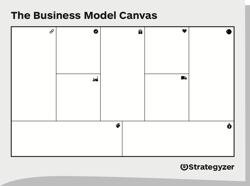
A business model is nothing else than a representation of how an organization makes (or intends to make) money. This can be nicely described through the 9 building blocks illustrated in the graphic below, which we call "business model canvas".

Insight: In addition to this post check out the business model design template

The business model topic is very popular among business people today because in various industries we can see a proliferation of new and innovative business models (i.e. new ways of making money). In several industries new business models are threatening or even replacing established companies and conventional ways of doing business. Just have a look at the music or airline industry.

Hence, the interest in business models comes from two opposing sides:

  • Established companies have to find new and innovative business models to compete against growing competition and to fend off insurgents

  • Entrepreneurs want to find new and innovative business models to carve out their space in the marketplace
Within this context the business model concept is a particularly helpful unit of strategic analysis tailored to today's competitive business environment. It helps executives as well as entrepreneurs increase their capacity to manage continuous change and constantly adapt to rapidly changing business environments by injecting new ideas into their business model.

But what actually is a business model?

In management meetings the question of what a business model is (even what “our” business model is) often remains relatively vague. The main reason for this is because business people have an intuitive understanding of business models. Normal, since the business model is about how an organization makes money, which is a manger’s job after all. However, there is often a lack of a more precise and shared understanding of what a business model is. Yet, such a common understanding is required if we want to have high quality discussions of one’s business model and make important business model decisions.

Therefore we have come up with the 9 building block approach to describing business models. It has the characteristics of any other type of model (e.g. in architecture or engineering).

Like other models it is a simplified description and representation of a complex real world object. It describes the original in a way that we understand its essence without having to deal with all its characteristics and complexities. In the same line of thought we can define a business model as a simplified description of how a company does business and makes money without having to go into the complex details of all its strategy, processes, units, rules, hierarchies, workflows, and systems.

Based on an extensive literature research and real-world experience we define a business model as consisting of 9 building blocks that constitute the business model canvas (readers of this blog will realize that this is an updated and slightly adapted version of the model):
  1. The value proposition of what is offered to the market;
  2. The segment(s) of clients that are addressed by the value proposition;
  3. The communication and distribution channels to reach clients and offer them the value proposition;
  4. The relationships established with clients;
  5. The key resources needed to make the business model possible;
  6. The key activities necessary to implement the business model;
  7. The key partners and their motivations to participate in the business model;
  8. The revenue streams generated by the business model (constituting the revenue model);
  9. The cost structure resulting from the business model.
Origins of the term business model

The term business model became popular only in the late 90s, which, personally I think is related to the rapid erosion of prices in the IT and telec